

Whenever there’s news of a new virus found on animals or a laboratory leak incident, most if not all people of our generation would have flashbacks about a certain pandemic. Yes, you must have guessed it. I’m talking about the Covid-19 Pandemic. Even though it caused a major global lockdown, and even with various crazy theories flying around, there’s no certain conclusion of its origin. Regardless, the lockdown was a life turning point for humanity. Many lost their jobs, started work from home, and changed their lifestyles. But what about animals?
Most pets were more than happy to receive extra attention from their caregivers. With more people working from home, pets get more time around their humans. Actually, with humans staying at home during the lockdown, not just the in-door animals are happy. Wild animals also found an amazing opportunity to roam around!
What is Anthropause?
During the lockdown, reports of wild animals appearing in neighborhood and urban areas have reached its peak in recent years. According to Manenti et al. (2020), with 83 observations related to animals in Italy, “it appears that the lockdown triggered both the exploitation of novel/unusual habitats and an increase of daily activity of otherwise nocturnal/crepuscular species”. Another example is the sight of a puma, who normally resides on the nearby mountains, roaming the streets of Santiago in search of food (Chalasani, 2020). In other words, animals become active during times when they would usually remain hidden. However, why were they hidden? And what were they hiding from? The answer is humans.
This unusual shift in wild animal behaviors became widespread that researchers started calling this lockdown the most recent anthropause. Manenti et al. (2020) define the anthropause as a period of global slowing of human activities due to COVID-19. For the first time in modern years, humans have the opportunity to observe how wildlife respond to the reduction of human movement, traffic, and noise. One explanation for this is the fear of predators. According to Brookshire (2020), “everything fears us” as humans are “predators on pretty much everything”. As humans retreated indoors, many animals felt safer exploring areas they would normally avoid.
Wild Animal Behavior Shifts
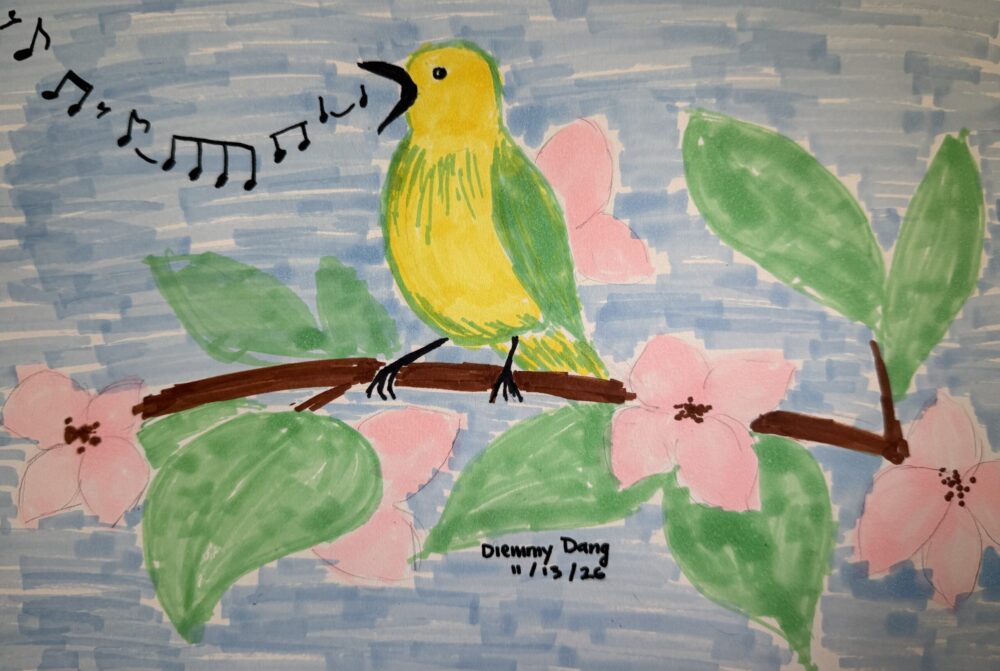
When it comes to urban areas with heavy traffic and dense human movements, birds are among the most visible wild animals in urban areas. According to various studies done by Derryberry et al. (2020), “birds sang more softly when noise levels were lower”. With less noise coming from traffic and humans in general, the researchers found that birds produced songs at lower amplitudes during the shutdown. This agrees with another study where birds’ songs in urban areas are observed to have a decrease in minimum frequency fourfold greater decrease than those in rural areas (Derryberry et al., 2020). Imagine trying to sing in a crowded room where you can barely hear your own voice. Wouldn’t you prefer a quieter space to sing? It seems that birds enjoyed the reduced noise pollution as well.
The changes were not limited to birds. Larger wildlife also changed their behaviors during the lockdown. Coyotes normally restrict their activities to the evening and night, but with fewer people outside, they are more than willing to come out during the day (Brookshire, 2020). Researchers also found that “animals made long-distance movement more frequently” because reduced human activity allowed them to move more freely (University of Montana, 2023). Their observations also found that “bears in Italy used corridors they had never used before” because human activity was reduced. These studies suggest that wild animals found the freedom to explore new areas created by the pandemic shutdown.
Wildlife After the Lockdown
Although the anthropause was temporary, it revealed how strongly human presence impacts wildlife behaviors. According to Tasoff and Marcus (2026), “about 67% of mammal species and 41% of bird species responded to landscape modification and human presence by shrinking their habitat”. During this period, the lockdown greatly reduces human disturbance during a critical period where animals engage in their spring reproductive activities (Manenti et al., 2020). In addition, a study done by Loh et al. (2021) also found that with naval noise reduction, the North Atlantic right whales (Eubalaena glacialis) have decreased their baseline levels of stress-related hormone. In other words, reduced noise pollution potentially contributes to the recovery of endangered populations.
Final Thoughts
As people return to their normal routines, the wild animals once again are hidden away. However, the arthropause demonstrated how animals respond when human disturbance is reduced. These findings suggest that it’s possible to achieve coexistence if we learn a way to give animals the space they need. What are your thoughts on this matter?
References
Brookshire, B. (2020, June 5). 5 reasons you might be seeing more wildlife during the COVID-19 pandemic. Science News. https://www.sciencenews.org/article/coronavirus-covid-19-pandemic-reasons-seeing-more-wildlife
Chalasani, R. (2020, April 22). Photos: Wildlife roams during the coronavirus pandemic. ABC News.
Derryberry, E. P., Phillips, J. N., Derryberry, G. E., Blum, M. J., & Luther, D. (2020). Singing in a silent spring: Birds respond to a half-century soundscape reversion during the COVID-19 shutdown. Science, 370(6516), 575–579. https://doi.org/10.1126/science.abd5777
Global study finds while humans sheltered in place, wildlife roamed. University of Montana. (2023, July 10). https://www.umt.edu/news/2023/07/071023hebb.php
Loh, H. C., Looi, I., Ch’ng, A. S., Goh, K. W., Ming, L. C., & Ang, K. H. (2021). Positive global environmental impacts of the COVID-19 pandemic lockdown: A review. GeoJournal, 87(5), 4425–4437. https://doi.org/10.1007/s10708-021-10475-6
Manenti, R., Mori, E., Di Canio, V., Mercurio, S., Picone, M., Caffi, M., Brambilla, M., Ficetola, G. F., & Rubolini, D. (2020). The good, the bad and the ugly of covid-19 lockdown effects on wildlife conservation: Insights from the first European locked down country. Biological Conservation, 249, 108728. https://doi.org/10.1016/j.biocon.2020.108728
Tasoff, H., & Marcus , B. (2026, March 21). Data on human and wildlife movement during the pandemic suggest new ways for us to coexist. The Current. https://news.ucsb.edu/2026/022581/data-human-and-wildlife-movement-during-pandemic-suggest-new-ways-us-coexist?utm_source=facebook&utm_medium=uc+santa+barbara&utm_term=&utm_content=f0693962-651d-4bbe-a087-c15b90881cbf&utm_campaign=