
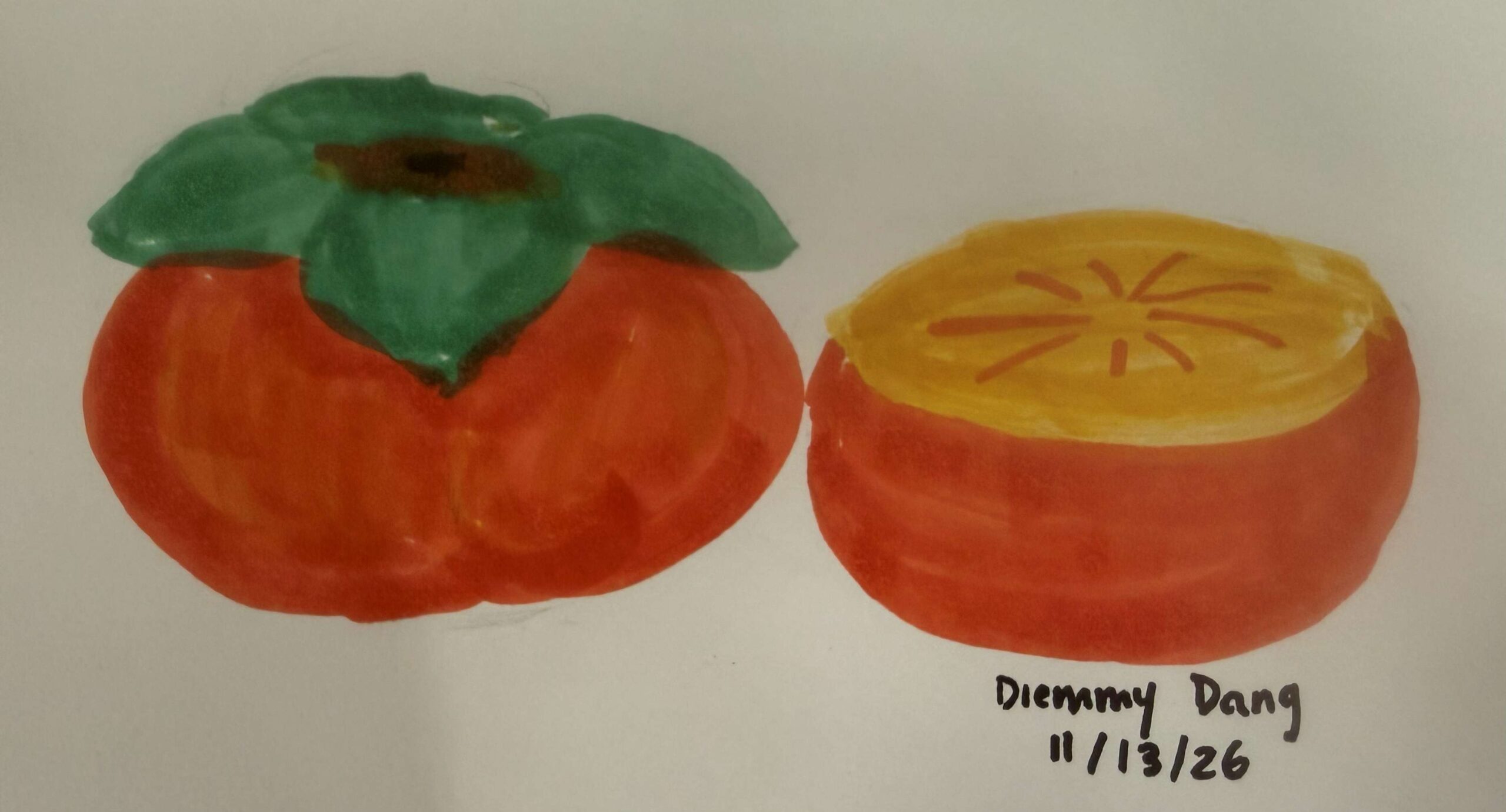

If you didn’t know, we are currently in the persimmon season! I’m in love with their sweetness and crunchiness. It’s the best when eaten fresh and before they are overripe. However, I have tried eating them in a different way recently. Dried fruits, especially mangoes, are another favorite snack of mine. So, I attempted to dry my persimmons. Traditional dried fruits often require a lengthy process and patience. Instead, I chose a quicker alternative: dehydration them in an air fryer. The result? The persimmon now has a chewy and slightly crispy texture, and the sweetness was enhanced without being too sweet. It piqued my interest and I started looking into the science of dried fruits.
The Science of Dried Fruits
When fruits undergo the drying process, most if not all of their moisture content is removed. Chang et al. (2015) defined dried fruits as “a concentrated form of fresh fruits … since a large proportion of their moisture content has been removed through sun-drying or various modern drying techniques”. Another study found that the bioactive compounds and antioxidants become concentrated after the drying process, which are crucial in supporting a better overall health (Alasalvar et al., 2023). Together, these findings suggest that dried fruits can be a nice addition to a balanced diet.
In addition, dried fruits also make amazing healthy snacks. According to Chang et al. (2015), “they are nutritionally equivalent to fresh fruits in smaller serving sizes”, easy to store and distribute, and are part of dietary recommendation across different countries. Some findings suggest that “frequent consumption of dried fruits benefits cardiovascular, gut microbiota, and bone health due to their unique composition of nutrients, bioactives/phytochemicals, and fibre.” (Alasalvar et al., 2023). Chang et al. (2015) also found that dried fruit consumption was associated with a higher overall diet quality score (providing vitamins A, E, and K, magnesium, phosphorus, and potassium) and lower body weight/adiposity measures. Therefore, dried fruits may be a convenient option for people who want to increase their nutrient intakes of fiber and vitamins.
Dried fruits also have a diversity of options to accompany different diets and preferences. For instance, small dried fruits like grapes, berries, and plums can come in whole. Larger ones may come in halves or as slices, with common examples including mangoes, papayas, and kiwis (Chang et al., 2015). Furthermore, processing of dried fruits are usually carried out at a low temperature to avoid the browning reactions. According to Chang et al. (2015), some fruits might undergo pre-treatment to slow down these non-enzymatic browning reactions, including but not limited to infusing the fruits with sugar solutions or fruit juice before drying. For instance, apples may be treated with pineapple juice before being processed.
My Persimmon Inspiration
As I currently have plenty of persimmons on hand, it was natural to consider an alternative way to consume them. I love eating them fresh, but it was also a good opportunity to try a new taste “for science”. According to Kim et al. (2018), persimmon is sweet, nontoxic, is known to assist in digestion, hangover, cough and frequently used to cure diseases such as boils, inflammation, and burn. In addition, Kim et al. (2018) reported that “drying persimmon increases the sweetness and vitamin A content” while preserving the persimmon for a longer period (Kim et al., 2018). Dried persimmon process may include the use of sulfurate (or alternative natural plant extracts) after peeling to prevent deterioration, soaking in 50 ml extraction liquid, followed by solar drying or air-drying method (Kim et al., 2018). I personally tried the quick and easy recipe – dehydration via air fryer.
A “Quick” Experiment for Science
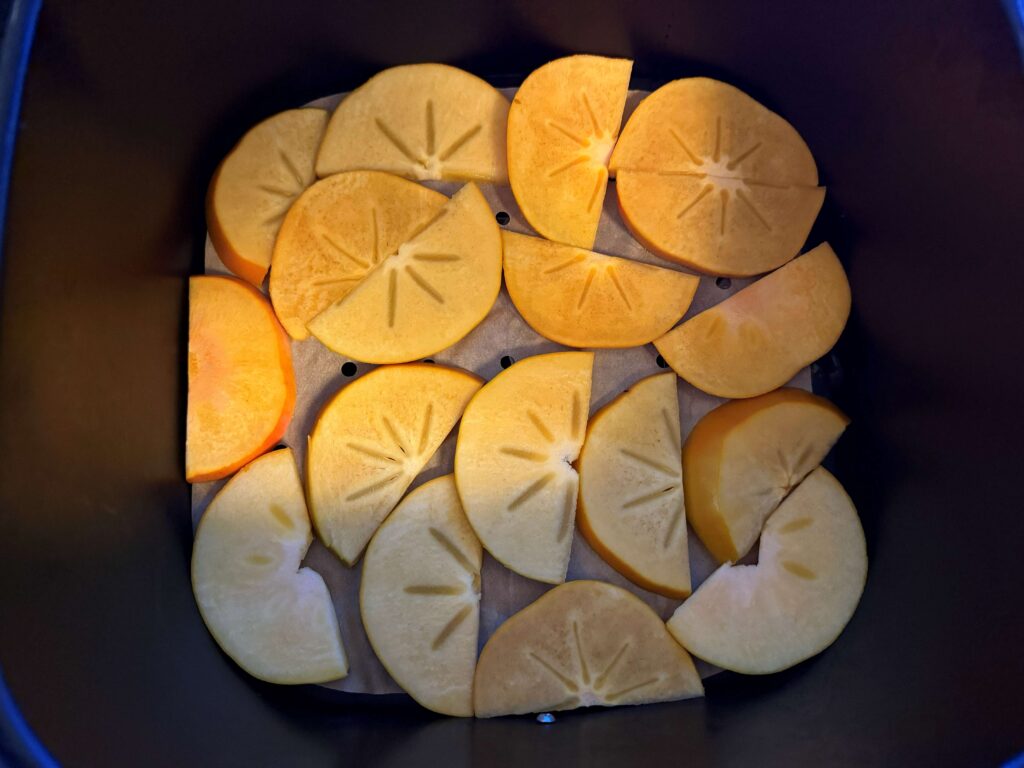
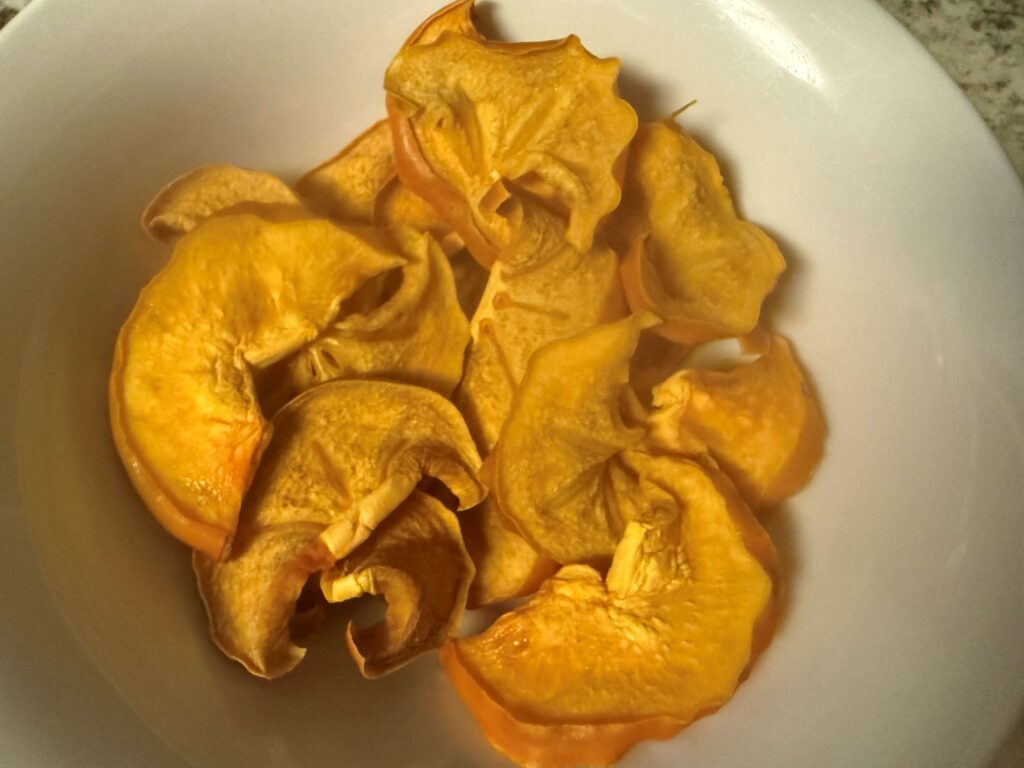
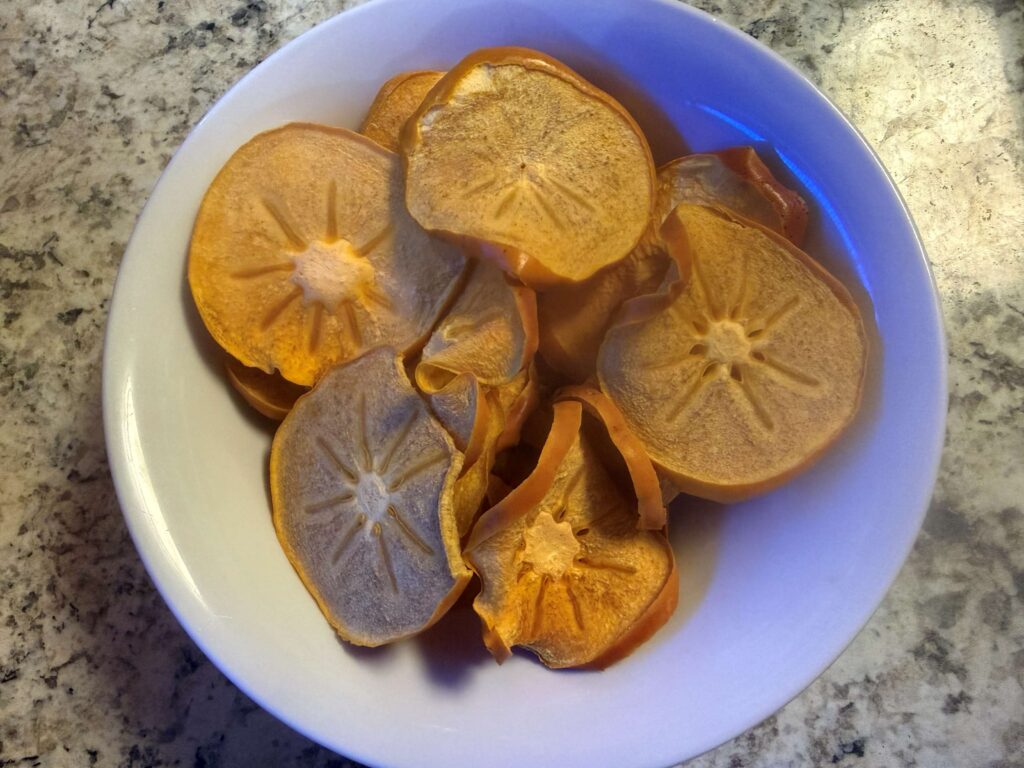
I believe that my persimmons belong to the Fuyu variety. They are firm, crunchy, and sweet. The texture is quite similar to that of apples. For the recipe, I kept the skin and sliced them into 0.5-0.8 cm thickness. Cutting those slices into half lets me fit more pieces into the container at once since stacking the slices would prevent even dehydration. I dehydrated each batch at 175 Fahrenheit for around 2 hours each. Occasionally, I also flipped them and fixed the liner. The thin slices come out slightly crispy, while the thicker ones have a chewy texture. I quite like the skin, but it can easily be peeled off later too. The skin was helpful in keeping the shape and providing an aesthetic look to the final product. Regardless, they all reached a new level of sweetness! It was worth the wait. I have to be careful to not consume too much of them with how the volumes greatly decreased but the nutrient intake doesn’t.
Why Not Experiment Yourself?
If you ever find yourself with more fruit than you can eat before it becomes overripe, drying may be worth trying. It extends shelf life, creates a different texture and flavor experience, and can reduce food waste. Even if you are not trying to preserve fruits, drying offers a different way to explore new snack ideas. For instance, a sprinkle of your favorite seasonings might become your new favorite way to eat them.
References
Alasalvar, C., Chang, S. K., Kris-Etherton, P. M., Sullivan, V. K., Petersen, K. S., Guasch-Ferré, M., & Jenkins, D. J. (2023). Dried fruits: Bioactives, effects on gut microbiota, and possible health benefits—an update. Nutrients, 15(7), 1611. https://doi.org/10.3390/nu15071611
Chang, S. K., Alasalvar, C., & Shahidi, F. (2015). Review of dried fruits: Phytochemicals, antioxidant efficacies, and health benefits. Journal of Functional Foods, 21, 113–132. https://doi.org/10.1016/j.jff.2015.11.034
Kim, J., Chung, I. K., Kim, H. Y., & Kim, K. (2018). Comparison of the quality of dried persimmon (diospyros kaki thunb.) treated with medicinal plant extracts and food additives. Food Science & Nutrition, 6(8), 1991–1998. https://doi.org/10.1002/fsn3.673
