
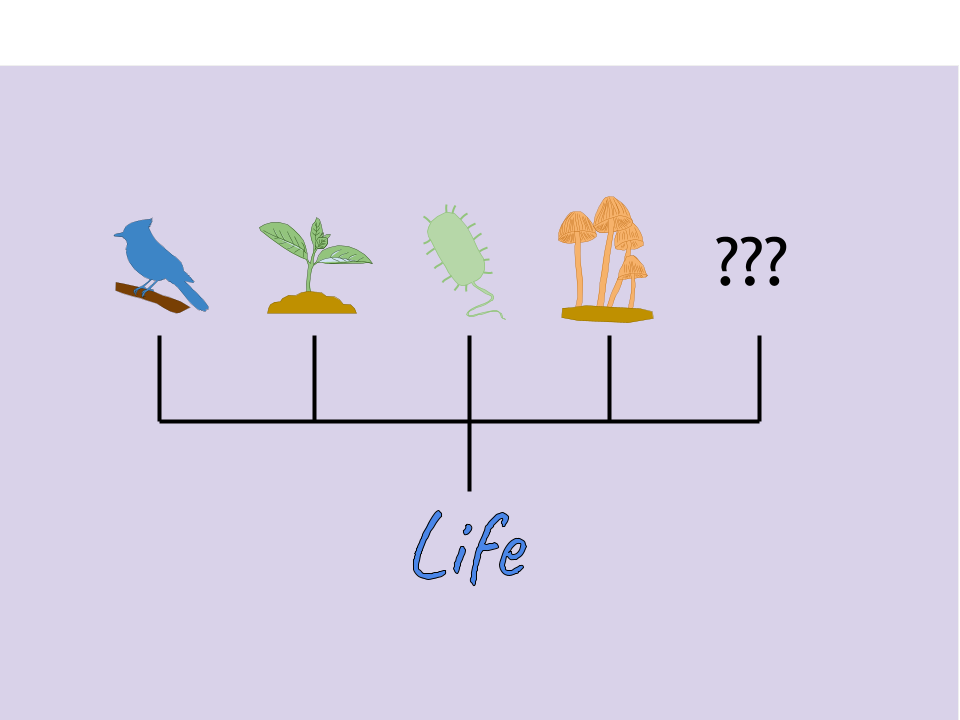

Long before dinosaurs existed, and before even trees, the landscape was dominated by a different type of giant organism, called Prototaxites. Growing over 26 ft tall, these trunk-like behemoths puzzled researchers for decades; they had similar characteristics to fungi, and yet its characteristics could not be attributed to any group of living fungi (Strullu-Derrien et. al., 2023). As a result, most research around Prototaxites debated whether or not they were fungi or a new, but extinct, lineage of life.
A paper published in January of 2026, by Loron et. al. (2026) may shed some new light in this debate. The researchers compared characteristics of Prototaxites taiti samples obtained from the Rhynie Chert, an area in Scotland known for exceptionally well-preserved fossils from the Early Devonian (408-360 million years ago), with established fungi characteristics. Here is what they found:
Physical differences
In P. taiti and across many Prototaxites species, medullary spots, dense regions of very small tubes, were found. These spots were suspected to be reproductive structures that had asci, a spore-containing structure in the fungus phylum (group) ascomycetes, and were therefore attributed to said group. However, new analysis revealed that the medullary spots were highly complex, with no comparable structures in fungi, and comparable to alveoli or capillary networks, which exchange gas, nutrients, and water. Therefore, Loron et. al. suggest that medullary spots could have served a similar purpose in Prototaxites.
P. taiti and other Prototaxites species also contained banded tubes, corresponding to thicker areas, similar to how tracheids in plants contain thickening cell walls in order to provide support for water transport. This thickening is something that is rarely seen in fungi, and among fungi, is only used for spore release. Since it is relatively common among Prototaxites, the researchers suggested that these banded tubes may have been used to transport substances, may have contributed to the size of Prototaxites, and ultimately do not support its nature as a fungus.
Molecular differences
The researchers also compared P. taiti samples with other fossil samples from the Rhynie Chert. Using a machine learning algorithm, researchers were able to group these samples into taxonomic groups based on their fossilization products. What they found was that the algorithm was able to differentiate between P. taiti and fungi 91% of the time, and P. taiti and and other chitinous organisms 93% of the time. In other words, the fossilization products that one would expect from a fungus was not found in the fossilization products of P. taiti. Finally, P. taiti samples were tested for the presence of perylene. Perylene is a known substance that is present in other fungi samples in the Rhynie Chert; however, they did not find Perylene in the P. taiti samples.
Conclusion
While this study isn’t totally conclusive, it does provide strong evidence that P. taiti, and other Prototaxites species, did not belong to the fungal kingdom. Previous studies have already shown that Prototaxites did not belong to any other kingdom of life; therefore, if Prototaxites are truly in a different kingdom from fungi, the only conclusion could be that Prototaxites may be a completely new kingdom of life.
References
Loron, C. C., Cooper, L. M., McMahon, S., Jordan, S. F., Gromov, A. v., Humpage, M., Rodgers, N., Pichevin, L., Vondracek, H., Alexander, R., Rodriguez Dzul, E., Brasier, A. T., Krings, M., & Hetherington, A. J. (2026). Prototaxites fossils are structurally and chemically distinct from extinct and extant Fungi. Science Advances, 12(4). https://doi.org/10.1126/sciadv.aec6277
Strullu-Derrien, C., Goral, T., Spencer, A. R. T., Kenrick, P., Catherine Aime, M., Gaya, E., & Hawksworth, D. L. (2023). A fungal plant pathogen discovered in the Devonian Rhynie Chert. Nature Communications, 14(1), 7932. https://doi.org/10.1038/s41467-023-43276-1
