

Protein Aggregates
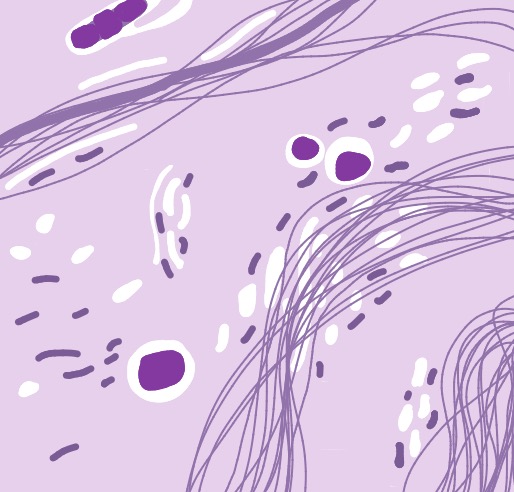
Recently, in my cellular and molecular biology class, I learned about Prion’s disease. It is caused by protein aggregates forming in cells in the brain. This is currently a large area of research, especially since misfolded proteins can cause other functional proteins to also misfold, causing a rapid decline in the patient (Harris, 1999). Protein aggregates are a big focus, but recently, some research has gone into aggregates of another biomolecule: carbohydrates, specifically glycogen.
Glycogen Structure
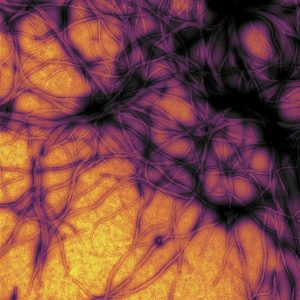
Glycogen is a molecule in the body made up of many glucose molecules. Our body uses it as a way to store glucose, and allows it to easily release glucose when our blood sugar is low. Glycogen is usually made of long chains with lots of branches. This structure makes glucose easy to break down, as there are many ends for enzymes to start breaking off glucose molecules from. Glycogen’s structure also increases its solubility, which is important because the cell is an aqueous environment. When a molecule is not soluble in water, it tries to fold or package itself in a way so that it is protected from the water. This is the case with proteins: they fold so the non-soluble parts are covered by the soluble parts so the molecule as a whole can be soluble in the cell.
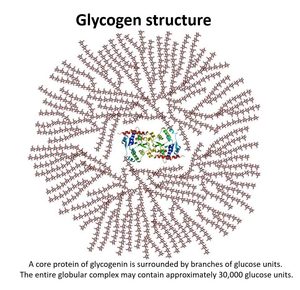
When glycogen is not branched, the long chains form stacks, called aggregates, to protect themselves from the water in the cell as much as possible. These aggregates are called polyglucosan and can interfere with the cell’s function when they get too large (Froese et al., 2015).
Quality Control
So what can the cells do about it? There are well known pathways for quality control of proteins, but not as much about glycogen. New studies have shown there are enzymes that tag unbranched glycogen for the ubiquitination pathway (Yip et al., 2026). This pathway was previously known to only be for protein degradation. Studies were done on mice lacking the glycogen branching enzyme, and they found an accumulation of polyglucosan with the tag for degradation. An interesting follow up study showed that glycogen is tagged in the liver during fasting (Jochem et al., 2026). This raises the question of if this degradation is an alternate way to release glucose into the bloodstream? We will have to stay tuned to find out.
References
Froese, D. S., Michaeli, A., McCorvie, T. J., Krojer, T., Sasi, M., Melaev, E., Goldblum, A., Zatsepin, M., Lossos, A., Álvarez, R., Escribá, P. V., Minassian, B. A., von Delft, F., Kakhlon, O., & Yue, W. W. (2015). Structural basis of glycogen branching enzyme deficiency and pharmacologic rescue by rational peptide design. Human Molecular Genetics, 24(20), 5667–5676. https://doi.org/10.1093/hmg/ddv280
Yip, M. C. J., Naydenova, K., Otten, E. G., Heatley, A., Moe, A., Anton, L., de Los Reyes-Ramírez, L., Jolin, H. E., Langevin, F., Wiacek, M., Franco, C., Bertolotti, A., Kukulski, W., McKenzie, A. N. J., & Randow, F. (2026). Quality control of glycogen through direct ubiquitylation by RNF213. Nature. https://doi.org/10.1038/s41586-026-11139-6
Jochem, M., Cobbold, S. A., Goodman, C. A., Kueng, C., Cerra, A., Fielden, L. F., Kim, M. L., Schenk, P., Agarwal, R., Wang, X. S., Scutts, S. R., Pandos, M., Tang, L., Hermanns, T., Devine, S. M., Brzozowski, M., Shibata, Y., Geoghegan, N. D., McLean, C. A., . . . Komander, D. (2026). Ubiquitination of glycogen and metabolites in cells and tissues. Nature, 655, 506–515. https://doi.org/10.1038/s41586-026-10548-x
Harris, D. A. (1999). Cellular biology of prion diseases. Clinical Microbiology Reviews, 12(3), 429–444. https://doi.org/10.1128/CMR.12.3.429
